Editorial method3 min read
A digital-fashion announcement can place a certification logo beside a beautiful garment render and leave the reader unsure what was assessed. Identify the object of certification before repeating the claim. A viewer program, a file and a commercial wearable are related parts of a presentation, with different evidence needs.
Read the guide ↗
Format notes3 min read
A digital collection can advertise several variants while using one shared geometric form. Read the variant claim before counting unique shapes or inferring size choices. The glTF material-variants extension provides a concrete example of how multiple surface combinations can coexist within one asset.
Read the guide ↗
Platform dispatches3 min read
An augmented-reality object can make a digital garment feel convincingly present in a room. That spatial preview is useful, but it does not independently establish that the garment tracks a body, fits an avatar or corresponds to a physical size. Read the demonstration's actual task before repeating a fitting claim.
Read the guide ↗
Format notes3 min read
A small digital-fashion file can be convenient to display while containing less editing structure than a creator expects. Distinguish delivery textures from the working project that produced them. Read the package description before assuming that a downloadable wearable includes layered artwork, source materials or permission to alter everything inside.
Read the guide ↗
Format notes3 min read
A file can mention a glTF extension without making every application capable of interpreting it. Learn the distinction between used features, required support and the destination's documented implementation. This reading exercise helps assess a digital garment announcement without pretending that a filename alone proves identical behavior across viewers.
Read the guide ↗
Collection reading3 min read
A garment moving beautifully through a runway film can come from a prepared animation, cached simulation or another production process. Describe what is shown before repeating a real-time claim. The distinction concerns how movement is produced and replayed, rather than whether the visual result deserves creative appreciation.
Read the guide ↗
Format notes3 min read
A simulation panel can use familiar words such as mass, stiffness and damping while still requiring context before it describes a real textile. Read a physical-match claim through its evidence. A plausible drape and a material name do not independently establish calibrated correspondence to a particular manufactured fabric.
Read the guide ↗
Format notes3 min read
A convincing scan-based garment can combine geometric structure and surface imagery. Learn to distinguish those contributions when reading a digitization announcement. A visible seam or embroidered detail may appear through image information, geometric form or both, with different implications for how the model can be inspected.
Read the guide ↗
Collection reading3 min read
A digital reconstruction can make a damaged or incomplete garment easier to imagine while adding decisions that were not directly observed. Read the project's evidence and interpretation together. Clear uncertainty makes the work more informative, allowing viewers to understand the historical argument rather than mistaking every rendered region for a surviving fact.
Read the guide ↗
Collection reading3 min read
A museum can open selected images and catalog data without releasing every possible digital representation of an object. Read the actual resource and reuse statement before describing a historic garment as freely downloadable in three dimensions. Access, file type and permission each need a clear place in the report.
Read the guide ↗
Platform dispatches3 min read
A creator-policy headline can sound like a single permission to sell digital fashion while the platform describes several separate stages. Read upload, publication and continued on-sale status independently. The method helps interpret an announcement without relying on remembered fees or promising that a working garment will receive approval.
Read the guide ↗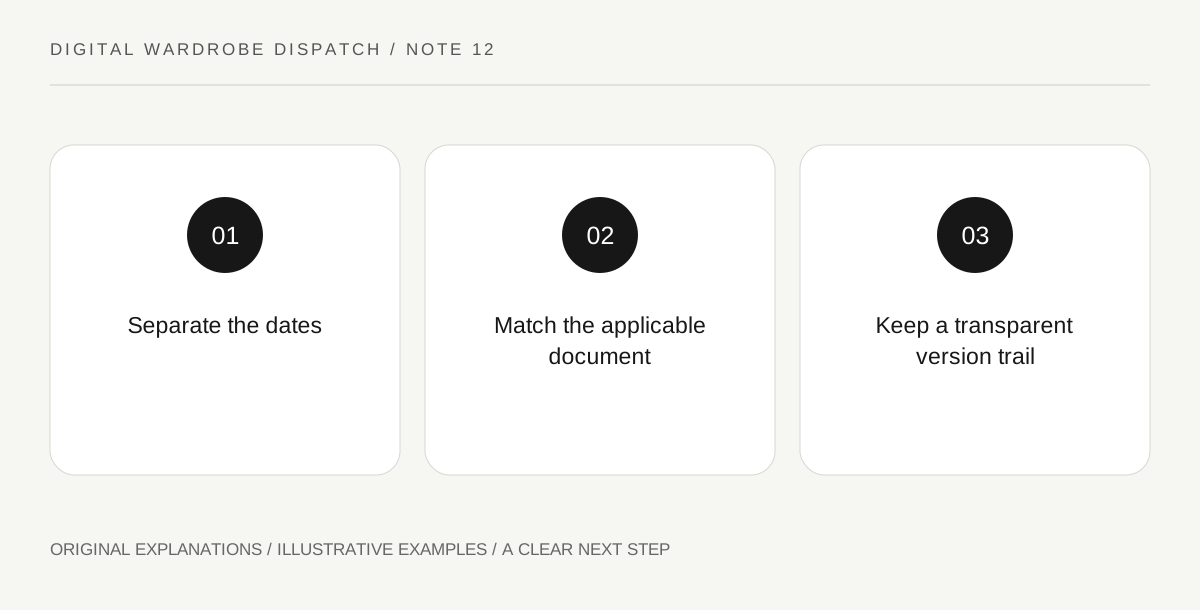
Editorial method3 min read
Digital-fashion creators can be affected by a policy update long after the announcement first circulates. Read the publication date, effective date and applicable audience separately. Preserve the relevant version so a later correction can explain what changed instead of silently treating every screenshot as the current rule.
Read the guide ↗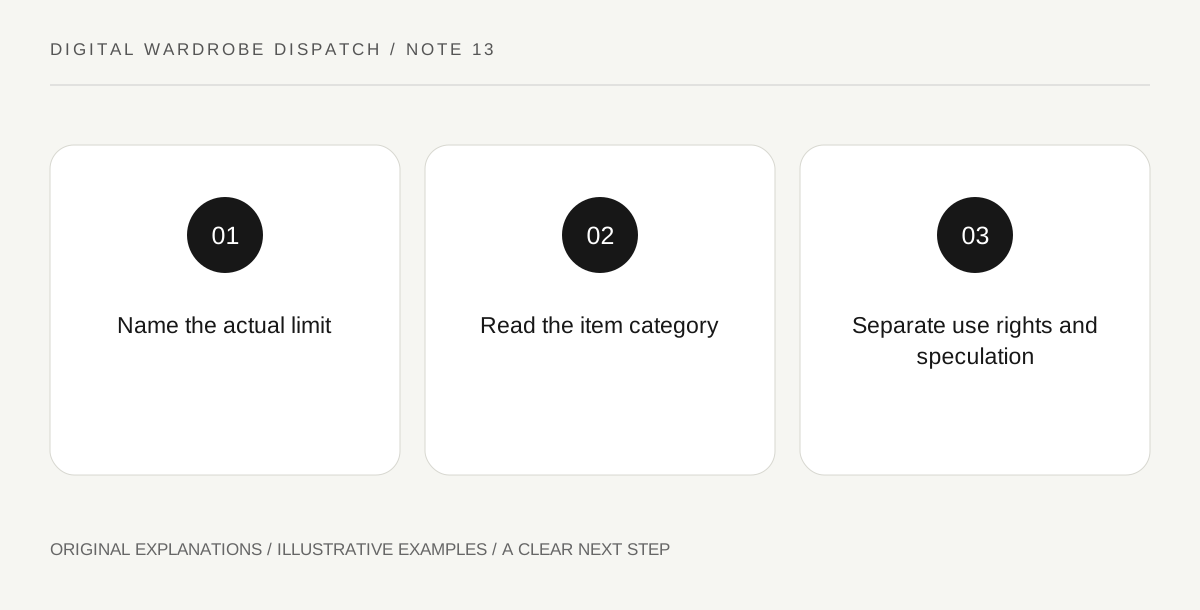
Collection reading3 min read
A limited sale can describe time, quantity or platform availability while leaving ownership and transfer questions unanswered. Read the scarcity claim and the actual use terms separately. A countdown is not a license document, and it does not turn a digital garment into a guaranteed financial opportunity.
Read the guide ↗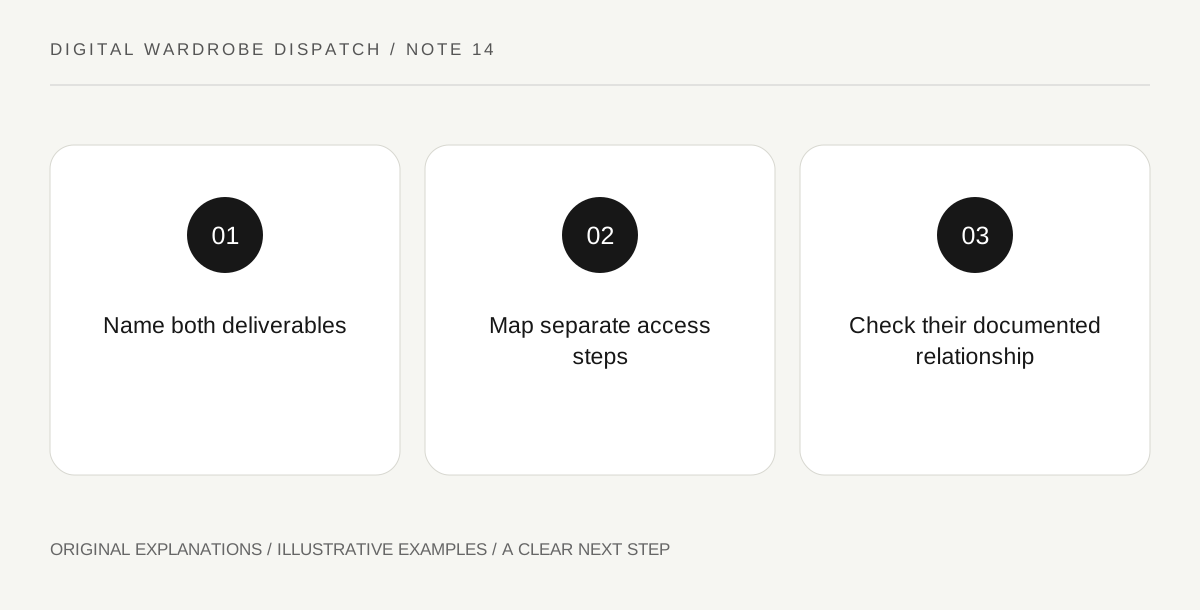
Collection reading3 min read
A fashion offer can pair a physical garment with a digital representation while leaving the delivery relationship unclear. List the two deliverables and their access steps before repeating the twin label. Similar appearance does not establish matched sizing, shared rights or automatic availability in a favorite avatar application.
Read the guide ↗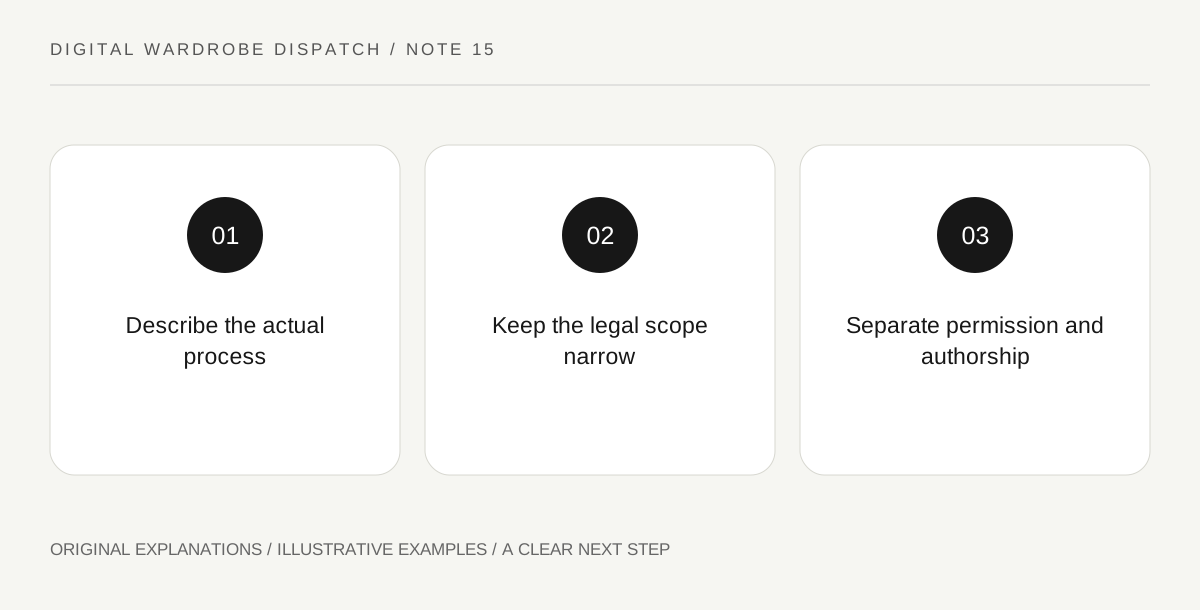
Editorial method3 min read
An AI-assisted digital-fashion release can raise several distinct questions about process, authorship and permitted use. Keep them separate in a report. A tool label does not settle the legal status of an entire garment, while a commercial license statement does not explain which expressive contributions were made by people.
Read the guide ↗
Editorial method3 min read
A digital fashion image can combine garment design, modeling, motion work, lighting and editorial presentation. A single creator label may conceal that collaboration. Read the published credits carefully and describe each documented contribution without guessing that the most visible name performed every stage of the work.
Read the guide ↗
Platform dispatches3 min read
A fashion film can remain easy to watch after its original live presentation has ended. Check whether a page offers a recording, a scheduled premiere or an interactive event. The distinction prevents a useful archive link from becoming a misleading promise that readers can still attend the original experience.
Read the guide ↗
Collection reading3 min read
A launch can name a brand, platform, studio and presenter while using collaboration as a broad umbrella. Identify each organization's stated role before reporting an endorsement or technical partnership. A shared page can reflect several kinds of involvement, and the useful story lies in those actual contributions.
Read the guide ↗
Format notes3 min read
An updated digital outfit can look different because its geometry changed, its materials changed or its delivery package changed. Read the revision note before counting it as a new silhouette or assuming a compatibility problem was fixed. A useful changelog names the affected part and the actual release it belongs to.
Read the guide ↗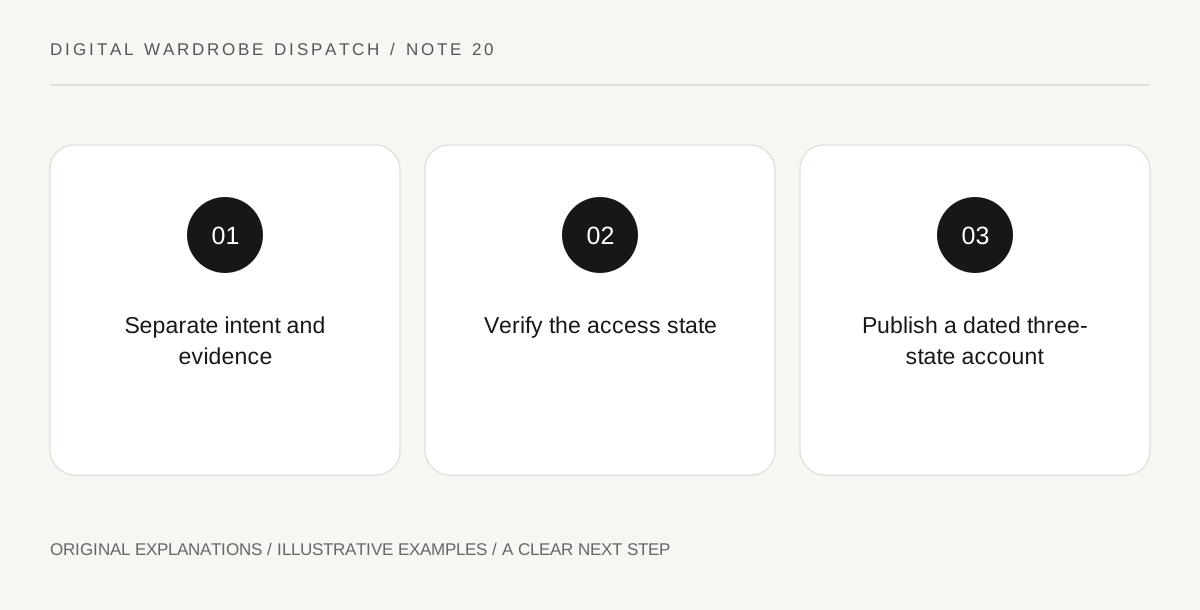
Editorial method3 min read
A convincing launch story can combine a future plan, a filmed demonstration and a product link in one page. Separate those states before telling readers what they can use. The method makes fashion technology reporting clearer without demanding that every creative concept already be a finished commercial release.
Read the guide ↗