An open museum photograph is different from a downloadable garment model
A museum can open selected images and catalog data without releasing every possible digital representation of an object. Read the actual resource and reuse statement before describing a historic garment as freely downloadable in three dimensions. Access, file type and permission each need a clear place in the report.
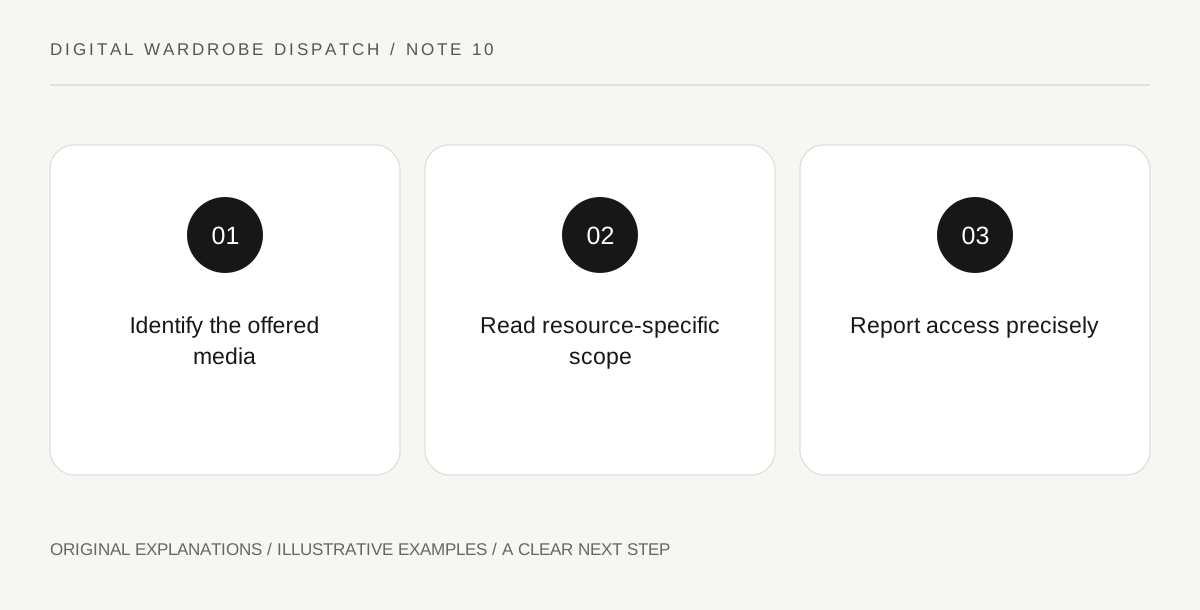
Original explanatory diagram. Read the full method and limitations below.
Name the resource actually offered
The Met's Open Access initiative identifies qualifying public-domain artwork images and basic collection data under CC0. That is a defined resource release. A garment record may contain photographs, descriptive fields and links with different functions. Write what is actually available on the relevant page rather than allowing an open-access badge to create a three-dimensional model that the institution has not offered. A useful catalog record is still valuable when it contains no mesh download.
Keep media types in separate fields
Distinguish a photograph, a catalog-data record, an interactive object view and a model file. A screenshot of a 3D viewer is not the same deliverable as the underlying asset. If a download exists, identify its type and edition from the institution's description. Do not infer raw capture data or editable garment patterns from a general model label. Each resource supports different tasks, so the choice should follow the documented contents rather than a broad promise of digital access.
Read the actual reuse scope
Check the resource-specific statement and any exceptions. A museum-wide initiative can have eligibility boundaries, while an individual file may involve other rights or conditions. Do not assume one institution's policy applies to another. If a planned use raises a legal question, seek appropriate advice instead of treating a general cultural-access article as a final rights determination. The editorial task is to connect the actual resource with its stated release scope and identify unresolved information.
Use a precise access sentence
A dispatch can say that catalog data and qualifying images are openly available, while noting whether a 3D asset is actually listed. This avoids both exaggeration and unnecessary dismissal. Keep the source page and check date in the editorial record, because resource availability can change. If a broken link prevents verification, report the limit rather than claiming to have downloaded a file. Readers should know what they can inspect today and what remains only a possibility or future project.
Illustrative worked example
Illustrative editorial scenario: a fashion-history article sees a museum's CC0 image badge and describes a dress as an open 3D download. The actual record offers photographs and catalog data. The editor corrects the media description and retains the genuine open-access benefit. A future 3D release can be reported separately if the institution documents it.
Questions that come up
Does open access always include source models?
No universal package follows from the phrase. Read the institution's actual release and the individual resource description.
Can I use one museum's policy for another collection?
No. Check the relevant institution and resource. Similar presentation or subject matter does not establish identical reuse conditions.
References and scope
These sources support the factual background. Examples and exercises are original illustrative teaching material. References do not imply endorsement.
- The Met: Open Access — The initiative releases qualifying public-domain artwork images and basic collection data under CC0, not every possible file on every museum site.