A runway recording is different from access to a current virtual event
A fashion film can remain easy to watch after its original live presentation has ended. Check whether a page offers a recording, a scheduled premiere or an interactive event. The distinction prevents a useful archive link from becoming a misleading promise that readers can still attend the original experience.
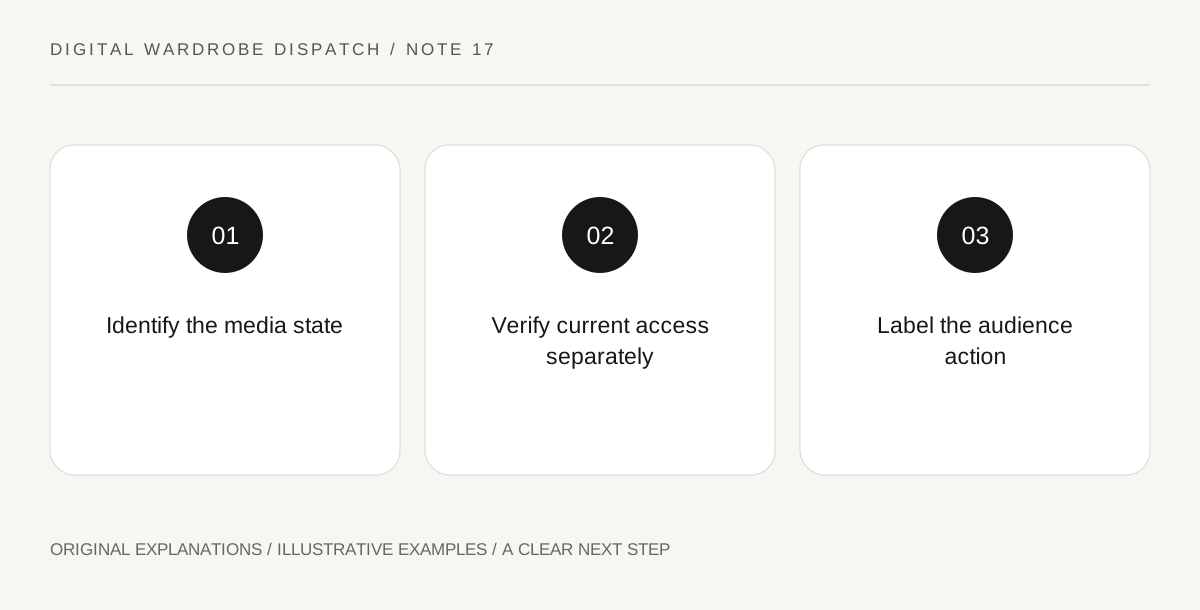
Original explanatory diagram. Read the full method and limitations below.
Identify the media state
Look for the page's own description: archive, replay, premiere, live stream or interactive experience. CFDA's historical RUNWAY360 launch announcement described several digital collection-launch capabilities, showing why one platform name can include different media. Do not infer the state from a play button alone. A recording may have an original broadcast date while the page itself was updated later. Keep those dates separate and describe the actual access offered at the time you verify it.
Read any event instructions as dated information
If the page identifies a live event, confirm its date, time zone and current access requirements through the organizer. A historical schedule is not a current invitation. Do not assume a link still leads to the same room or that an account requirement remains unchanged. If a release is only a recorded presentation, say so plainly. Readers should not create accounts or rearrange plans based on an ambiguous archive page described as an upcoming event.
Separate watching from participating
A stream can show a digital environment without allowing the viewer to navigate it, equip an avatar item or interact with other attendees. Those functions need their own documented access path. Avoid turning a camera movement inside a virtual venue into a claim that every viewer can enter that venue. A film can still be informative about a collection. The editorial task is to describe the audience action actually supported rather than promise participation from visual resemblance.
Write an access note that can age clearly
Use an explicit check date for live operational details and identify historical material as historical. If current access cannot be confirmed, provide the verified recording description and leave the event route unclaimed. Avoid vague language such as available now without specifying what is available. A small distinction between watch this archive and attend this event saves readers considerable confusion while preserving the value of both kinds of digital fashion presentation.
Illustrative worked example
Illustrative scenario: an old collection premiere page retains its video and original live-event language. A draft tells readers to join the virtual venue today. The editor checks the organizer's current page, confirms only the recording and labels the link as an archive. No current attendance route is invented, and the collection remains accessible as a documented film.
Questions that come up
Does a play button mean a live event is happening?
No. It may open a recording or another media format. Read the page and organizer's current information.
Can a recording still be useful for digital-fashion reporting?
Yes. Describe its historical context and visible content accurately, without treating archived media as a current operational service.
References and scope
These sources support the factual background. Examples and exercises are original illustrative teaching material. References do not imply endorsement.
- CFDA: RUNWAY360 Launch Announcement — A historical announcement describes several digital collection-launch media and functions; not evidence of current event access.