Uploading, publishing and staying on sale are different marketplace states
A creator-policy headline can sound like a single permission to sell digital fashion while the platform describes several separate stages. Read upload, publication and continued on-sale status independently. The method helps interpret an announcement without relying on remembered fees or promising that a working garment will receive approval.
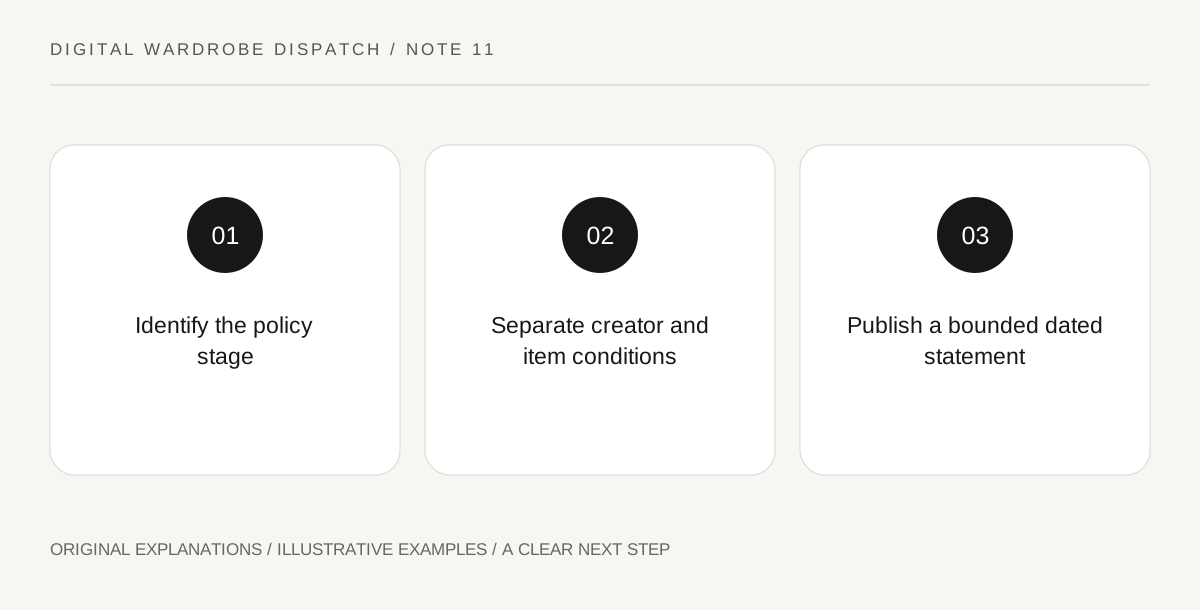
Original explanatory diagram. Read the full method and limitations below.
Start with the platform's current categories
Roblox's Marketplace policy distinguishes requirements for uploading, publishing and keeping content on sale. That separation is the relevant primary fact for this reading exercise. Record the platform, page and check date before interpreting a headline. Do not import an old tutorial's numerical requirements into a current story. The policy can change, and requirements may depend on the item category or account context described in the actual documentation.
Name the action affected by the announcement
A change allowing an upload does not automatically settle sale eligibility. A change to creator verification may differ from a requirement concerning the asset itself. Underline the action and subject in the official statement. If a press summary says creators can now sell, compare it with the primary page before repeating that broad sentence. Keep creator conditions and item standards separate so the reader can see which question each source actually answers.
Distinguish a valid file from an approved listing
An asset displaying correctly in a local scene is a technical observation. Marketplace publication can involve policy, review and other conditions that the local display does not establish. Avoid reporting approval from a creator's render alone. If a listing is publicly available, identify the actual item and date rather than assuming a future release. This is an editorial status check, not an instruction to bypass platform review or manipulate an account to satisfy requirements.
Write a dated, bounded dispatch
A useful report says which stage the current policy addresses and links the primary source. Avoid fixed numbers unless they are necessary, verified and clearly dated. Explain what remains for an intended creator to check in the live documentation. An article should not become an accidental promise of continued eligibility after a membership, account or policy change. The lasting lesson is the distinction between stages, while the operational decision belongs to the current platform requirements.
Illustrative worked example
Illustrative scenario: a headline says a new account rule opens digital clothing sales to everyone. Reading the actual policy reveals separate upload, publication and on-sale conditions. The editor rewrites the story around the specific stage affected and leaves other requirements visible. No account change, upload or approval is claimed from the announcement alone.
Questions that come up
Does a successful upload prove an item can stay on sale?
Do not infer that from one stage. Read the platform's current requirements for the separate action and account context.
Should a guide preserve old fee numbers forever?
Only as clearly historical information. A current operational decision needs the relevant live primary requirements rather than an undated number copied from an earlier guide.
References and scope
These sources support the factual background. Examples and exercises are original illustrative teaching material. References do not imply endorsement.
- Roblox: Marketplace Policy — Upload, publishing and continuing on-sale requirements are separate current policy categories; no fee or eligibility shortcut is promised.