A compact garment download is different from an editable texture project
A small digital-fashion file can be convenient to display while containing less editing structure than a creator expects. Distinguish delivery textures from the working project that produced them. Read the package description before assuming that a downloadable wearable includes layered artwork, source materials or permission to alter everything inside.
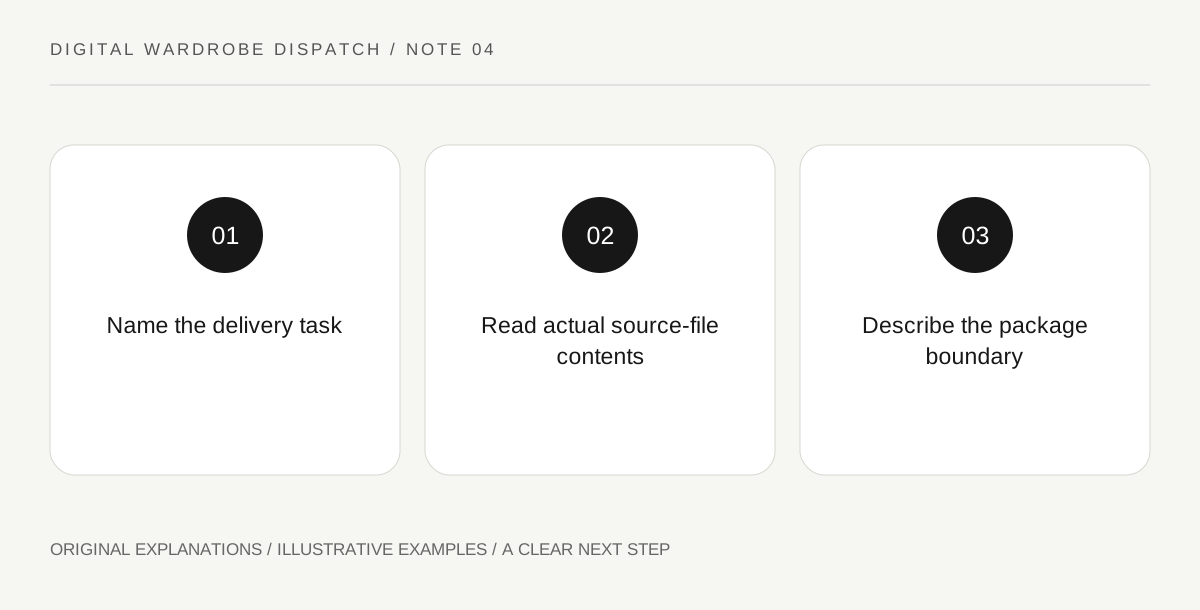
Original explanatory diagram. Read the full method and limitations below.
Identify the delivery purpose
Khronos's KTX artist guidance describes texture compression for glTF delivery and notes renderer support requirements. That is a useful example of preparing assets for consumption in another application. It does not establish that a particular garment package includes its original image layers. Record the advertised output and intended viewer separately from editable source files. A technically valid delivery texture can serve its stated purpose even when it is unsuitable as a complete creative working archive.
Ask which editing structure is included
Look for explicit references to layered image files, material source graphs or another named editable format. A flattened surface image and a layered painting project provide different control. Do not infer a hidden working project from high resolution or a large download size. If the package promises editable textures, ask what that means in concrete file terms. Keep the answer attached to the actual edition, because another package from the same creator may have a different deliverable scope.
Separate transformation from permission
An application's ability to convert a texture or open a file does not independently grant modification or redistribution rights. Read the actual terms for the intended use without assuming that a convenient technical route expands them. This article concerns the distinction between file roles, not a legal determination about an individual asset. If an important editing action remains unclear, obtain appropriate clarification or choose a package whose documented scope already supports the task.
Report the package accurately
A dispatch can describe an optimized delivery asset without calling it a full source release. If the announcement gives compression results, retain the tested context and avoid extrapolating a speed increase to every device. Keep file size, memory use and editing flexibility in separate fields. Readers can then understand the convenience on offer without expecting a production archive or universal performance guarantee. Mark unverified package details as unknown rather than filling them from a polished preview.
Illustrative worked example
Illustrative editorial scenario: a digital jacket download contains compressed delivery maps and a display-ready asset. A buyer expects editable painted layers because the announcement says high-resolution textures. Reading the actual package resolves the mismatch before purchase. An editor describes the release as a delivery package and notes that layered source files are not stated, without implying that the compression process itself is defective.
Questions that come up
Does a larger texture prove layered source artwork is included?
No. Resolution describes image dimensions, while editability depends on the actual supplied structure and files.
Can compressed delivery assets be useful professionally?
They can suit a defined display workflow. The question is whether the documented package serves the intended task, rather than whether every delivery must contain all working sources.
References and scope
These sources support the factual background. Examples and exercises are original illustrative teaching material. References do not imply endorsement.
- Khronos: KTX Artist Guide — Compressed delivery textures and the relevant renderer support, not an editable source-project guarantee.