A digital-fashion dispatch should separate announced, demonstrated and released
A convincing launch story can combine a future plan, a filmed demonstration and a product link in one page. Separate those states before telling readers what they can use. The method makes fashion technology reporting clearer without demanding that every creative concept already be a finished commercial release.
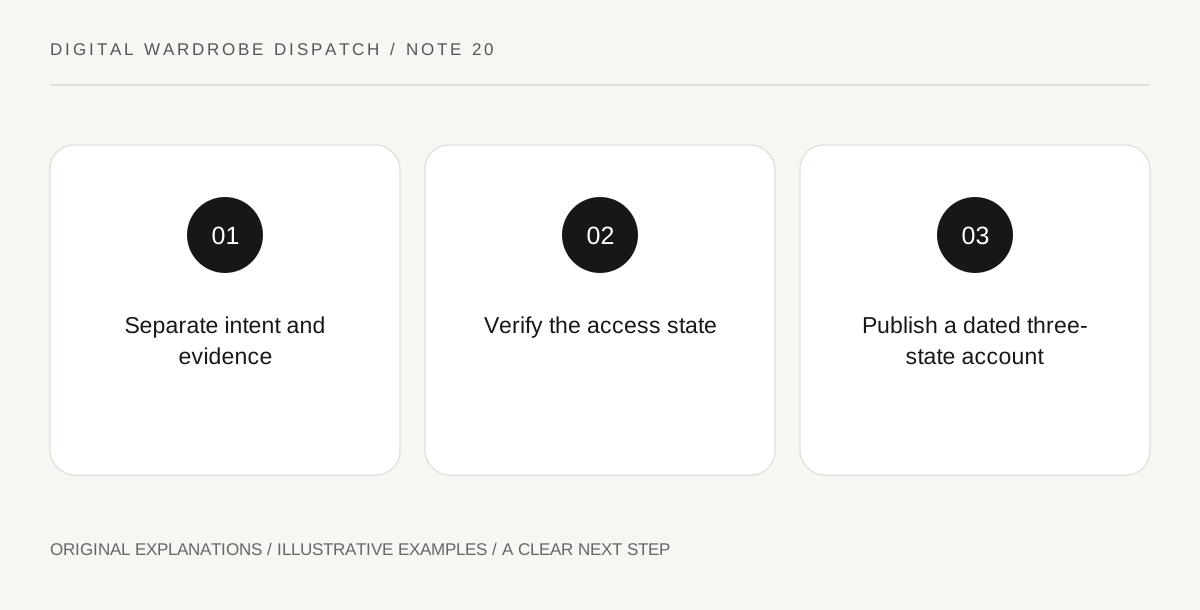
Original explanatory diagram. Read the full method and limitations below.
Mark the announcement as a claim about intent
Read the maker's stated plan, date and intended audience. CFDA's historical RUNWAY360 launch announcement illustrates how a primary release can describe planned capabilities before the launch described in that text. Keep the announcement's historical moment visible rather than reading it as a perpetual current status. A future-tense statement is useful evidence of an announced intention, but it does not independently establish delivery, continued operation or availability for every reader today.
Describe the demonstration literally
Name whether the evidence is a film, interactive preview, documented test or another format. A demonstration can establish that something was shown under specified conditions. It does not automatically prove a downloadable package, public service or marketplace approval. Keep maker-supplied evidence attributed. If the reporter has not independently used the asset, say what the source demonstrates rather than implying a firsthand review. A striking result can remain interesting while its operational scope is limited.
Verify the release action separately
Look for the actual current product or access route and the primary conditions relevant to using it. Platform publication policies can distinguish stages beyond a local demonstration. Do not infer release from a concept gallery or a coming-soon page. If access requires a particular account, region or device, retain the documented limitation. When current status cannot be verified, label it unknown instead of substituting a cached promotional phrase such as available to everyone.
Publish a three-state summary
A useful short account can identify what was announced, what was actually shown and what is currently documented as released. Dates and source links should make the progression understandable. Avoid treating an unreleased concept as a failed product simply because it remains a concept; assess it against its stated purpose. Equally, do not ask readers to spend time or money as though an announced future capability were already guaranteed. Clear states help both creative appreciation and practical decision-making.
Illustrative worked example
Illustrative editorial scenario: a fictional digital coat page contains a future marketplace plan and a rendered film. A draft says the wearable is available today. The editor finds no verified listing and separates the three states: announced destination, demonstrated visual sequence and unverified public release. The article remains useful without inventing current access or dismissing the design concept.
Questions that come up
Does a polished demonstration prove public availability?
No. It establishes the demonstrated content and conditions, while release and access need their own relevant evidence.
Can a concept still deserve coverage?
Yes. Describe it as a concept and evaluate its stated visual or research purpose, keeping operational promises at the level actually supported.
References and scope
These sources support the factual background. Examples and exercises are original illustrative teaching material. References do not imply endorsement.
- CFDA: RUNWAY360 Launch Announcement — A historical announcement describes several digital collection-launch media and functions; not evidence of current event access.
- Roblox: Marketplace Policy — Upload, publishing and continuing on-sale requirements are separate current policy categories; no fee or eligibility shortcut is promised.